
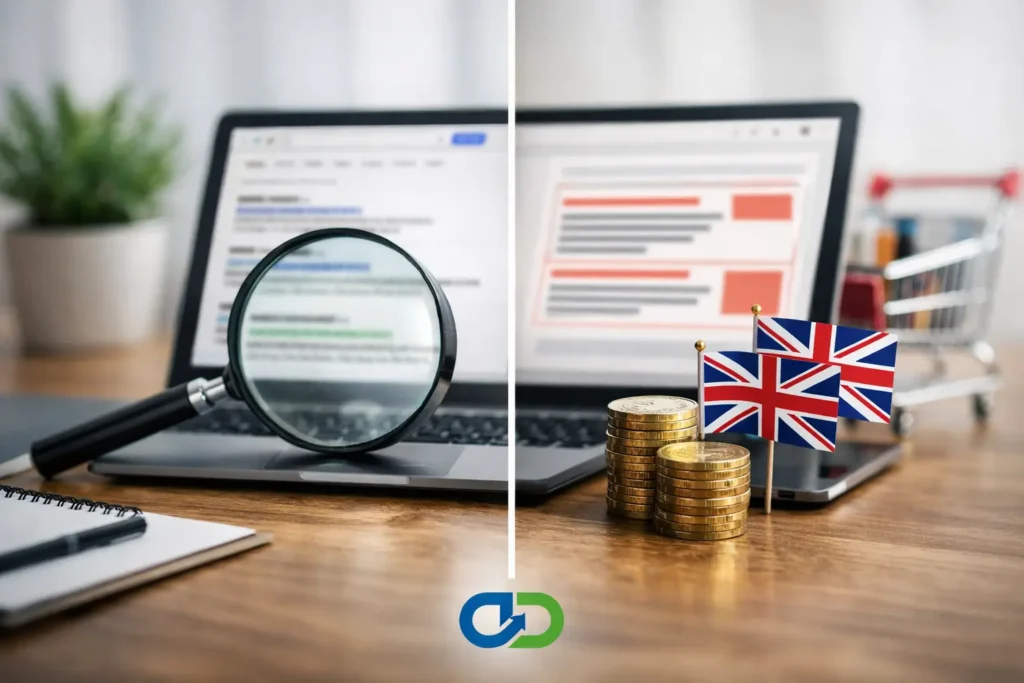
A new website can look exceptional and still struggle to generate enquiries if nobody can find it. That is where the SEO vs paid ads decision becomes commercial, not just technical. Both can put your business in front of the right people. The difference is how quickly they work, what they cost over time, and what remains once the budget changes.
For growing brands, the strongest answer is rarely choosing one channel in isolation. It is deciding what your business needs now, what it needs six months from now, and whether your website is prepared to turn attention into action.
SEO vs Paid Ads: The Core Difference
SEO earns visibility in organic search results. It involves improving your website’s technical foundations, content, structure, authority and user experience so search engines can understand and recommend it for relevant searches. You do not pay for each visit, but you do invest in the work required to earn and retain those rankings.
Paid ads buy visibility. Through platforms such as Google Ads, you can place an offer in front of users searching for a service, product or solution. You set a budget, bid for relevant terms and pay when someone clicks. It can create traffic quickly, provided the campaign, targeting and landing page are properly managed.
The simplest distinction is this: paid ads rent attention; SEO builds an asset. That does not make SEO automatically better. Renting attention can be exactly the right commercial move when speed matters.
When Paid Ads Make More Sense
Paid search is built for immediacy. A campaign can be live in days rather than months, making it useful for a product launch, a new service area, a time-sensitive promotion or a business that needs leads while its organic presence is still developing.
It also provides useful market intelligence. You can see which search terms attract clicks, which messages earn engagement and which offers generate enquiries. That information can sharpen a wider marketing strategy and inform the content your website needs to rank for organically.
For example, a professional service business launching a new offering may not yet have a dedicated page with enough authority to rank. A focused paid campaign can drive qualified visitors to a purpose-built landing page while the longer-term SEO work takes shape. The key phrase is purpose-built. Sending paid traffic to a generic homepage is often an expensive way to learn that your message is unclear.
Paid ads are not a switch you turn on and forget. Cost per click varies significantly by sector, competition and location. In high-value markets, a handful of poorly qualified clicks can consume a meaningful part of the budget. Campaigns need disciplined keyword selection, negative keywords, clear conversion tracking and regular refinement.
They also stop working the moment spend stops. If paid search is your only acquisition channel, your visibility is tied directly to a monthly media budget. That can be appropriate, but it should be a conscious decision rather than an accidental dependency.
Where SEO Creates Stronger Long-Term Value
SEO takes longer because it asks your website to prove its relevance. Search engines assess far more than a phrase on a page. They look at useful content, page quality, site speed, mobile usability, internal structure, topical relevance and signals that suggest your business is credible.
For a business with a clear service offer and the capacity to invest consistently, this work compounds. A well-structured service page can attract relevant visitors month after month. A strong library of supporting content can answer early-stage questions, build trust and introduce your brand before a prospective client is ready to enquire.
Organic search often brings a different kind of commercial value too. People who find you through a specific search may already understand their problem and be actively comparing options. If your page addresses their needs with clarity, demonstrates expertise and makes the next step simple, it can attract high-intent enquiries without a cost attached to every click.
However, SEO is not free marketing. It requires research, content, technical improvements, design consideration and ongoing measurement. It is also vulnerable to weak foundations. A template-led website with slow pages, confusing navigation and thin service copy will have a harder time competing, however ambitious the keyword plan may be.
This is why design and SEO should not sit in separate rooms. Search visibility gets people to the site. User experience gives them a reason to stay, trust the business and take action.
Cost, Control and Timing
The right channel depends on the pressure your business is under.
If you need leads this month, paid ads offer greater control over timing. You can allocate budget to a location, audience or service line, test the result and adjust quickly. This makes paid media especially valuable for campaigns with defined commercial targets.
If you want to reduce reliance on paid acquisition over the next year, SEO deserves sustained investment. It can produce a stronger return over time because the pages, content and technical improvements remain in place. Results are not guaranteed, and rankings can move, but the work improves the quality and discoverability of your digital property.
Budget should be considered beyond media spend. A paid campaign needs strategic setup, compelling creative, campaign management and a conversion-ready landing page. SEO needs a sound website, purposeful copy, technical care and patience. Choosing the cheaper-looking option at the outset can be misleading if it fails to produce useful enquiries.
Control works differently too. Paid ads provide direct control over where budget is placed, but the auction determines the price and competition can change overnight. SEO gives you control over the quality and structure of your site, but not a guaranteed position in the results. Good marketing plans account for both realities.
Your Website Is the Deciding Factor
Neither channel can compensate indefinitely for a website that feels generic, difficult to use or unclear about its offer. Traffic is not the goal. Commercially useful action is.
Before increasing spend on SEO or paid media, assess the path from search to enquiry. Can a visitor immediately tell what you do, who it is for and why they should choose you? Is the page focused on one intent? Does the design support the message rather than distract from it? Are forms, calls to action and contact routes simple to use on mobile?
For SEO, this means each core service should have a considered page rather than a short paragraph buried in a broad services section. For paid ads, it means matching the language in the advert to the headline, proof points and call to action on the landing page. Message mismatch wastes attention and budget.
A refined digital experience is not decorative polish. It is part of performance. Clear hierarchy, strong copy, credible visuals and fast, accessible pages support both organic visibility and conversion rate.
A Smarter Way to Combine Both
For many small and mid-sized businesses, the practical approach is to use paid ads for precision and SEO for momentum. Paid campaigns can target urgent, commercially valuable searches while organic work builds authority around core services, locations and questions your audience is already asking.
Start by identifying the services that matter most to revenue, not simply those with the highest search volume. A niche service with fewer searches may deliver better enquiries than a broad, competitive term that attracts people with no intention of buying.
Then use paid search to test positioning. Compare messages, offers and calls to action. Review which terms convert rather than which merely generate clicks. Those insights can shape your service pages, content priorities and wider brand messaging.
At the same time, build the SEO foundations properly. Improve site architecture, strengthen core pages, resolve technical issues and publish useful content where it supports a genuine buying journey. Avoid producing content purely to fill a calendar. Every page should have a reason to exist for the audience and the business.
Measurement must connect back to outcomes. Track qualified enquiries, booked consultations, sales and revenue where possible. Page views and impressions offer context, but they do not tell you whether marketing is moving the business forward.
What Should You Prioritise?
Prioritise paid ads if you need immediate demand generation, have a defined offer and can support the cost of testing and ongoing optimisation. Prioritise SEO if you are building a long-term growth channel, have a strong website or are prepared to improve it, and want visibility that is not entirely dependent on monthly spend.
If your brand is still finding its position, begin with the fundamentals. Clear strategy, a distinctive identity and a high-performing website make every marketing pound more effective. DBL Designs approaches the work this way: brand, experience and performance should reinforce one another rather than compete for attention.
The better question is not whether SEO or paid ads wins. It is whether your marketing is creating short-term opportunities while building a digital presence that grows more valuable with every considered improvement.