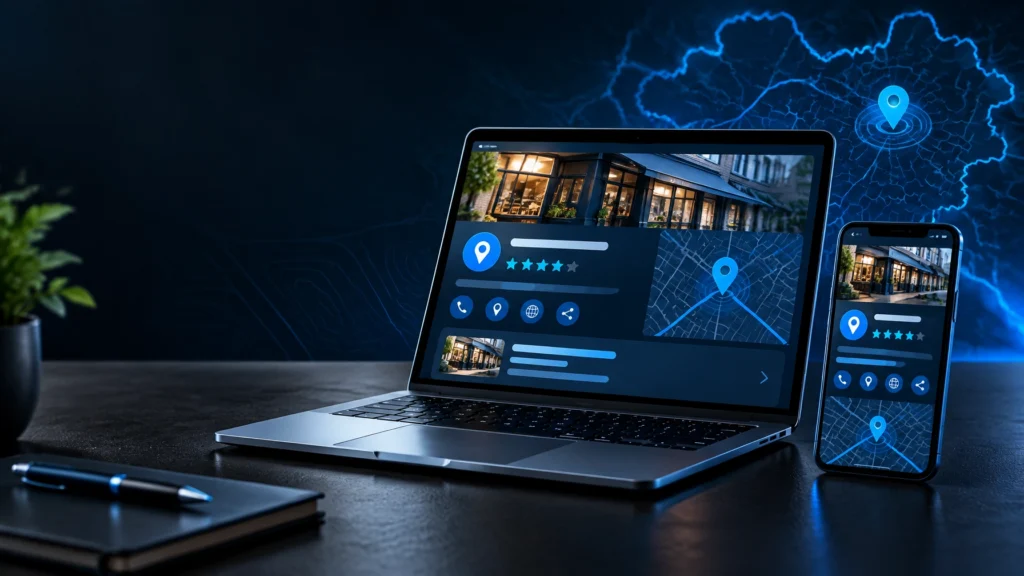

A website is often the first serious test of your business. Before a prospect calls, requests a quote or visits your premises, they decide whether you look credible, relevant and easy to work with. That is why choosing a website designer Rochdale businesses can rely on should be about more than finding someone who can assemble a few pages.
A strong website needs to make your position clear, guide visitors towards action and support the way your business actually operates. For a growing service business, that may mean better-quality enquiries. For a retailer, it may mean a clearer route to purchase. For an established company with an ageing site, it may mean restoring confidence in a brand that has outgrown its current presentation.
A website should do more than look current
Visual quality matters. A poorly designed site can make even excellent work feel inconsistent or low value. But aesthetics alone do not create commercial value. The best websites combine a considered visual system with a structure that makes decisions easy for the visitor.
Within a few seconds, people should understand what you do, who it is for and why your offer is worth considering. They should not need to decode vague headlines, hunt through a menu or scroll through a wall of generic claims. Clear messaging, purposeful page hierarchy and well-placed calls to action all carry as much weight as typography, imagery and colour.
This is especially relevant for businesses in competitive local markets. When several firms offer similar services, the website that appears sharper, clearer and more useful usually earns the next conversation. Good design gives your expertise a visible form.
What a website designer in Rochdale should establish first
Design should start with the mind, not the homepage. Before layouts are explored, a designer should understand the business behind the brief: its goals, audience, sales process, strengths and practical constraints.
A productive discovery stage asks direct questions. Which services generate the strongest work? What does a good lead look like? Are visitors ready to enquire straight away, or do they need proof before they commit? Does your team need to update content internally? Are there existing brand assets worth retaining, or does the website expose a wider positioning issue?
The answers shape the project. A trades business may need service pages designed around local intent, trust signals and simple enquiry routes. A professional practice may need a calmer experience that establishes authority before asking for contact. A creative brand may need strong portfolio storytelling without allowing visual effects to obstruct usability.
Templates can be useful for very early-stage ventures with limited budgets and straightforward needs. They are quick to launch and can provide a functional starting point. The trade-off is that templates often force a business into a predetermined structure, with compromises around brand expression, content hierarchy and future flexibility.
A custom approach is more valuable when your business needs to stand apart, has several services to explain or relies on its website as an active source of leads. It allows the design to follow the strategy rather than asking the strategy to fit a theme.
The foundations of a high-performing website
Brand clarity before decoration
A website should feel like a natural extension of the business, not a collection of fashionable interface elements. Every decision – from the tone of the copy to the balance of white space – should reinforce your market position.
That might mean restrained, editorial styling for a premium consultancy or an energetic visual system for a challenger brand. Neither approach is automatically better. The right direction depends on the audience you want to attract and the level of confidence you need the site to communicate.
A refined identity also creates consistency beyond the website. The same visual logic can carry through to proposals, social content, printed materials and campaigns, making the business easier to recognise at every touchpoint.
User experience that removes friction
User experience is not an abstract technical exercise. It is the practical work of helping people reach the information they need with minimal effort.
Navigation should be concise and familiar. Service pages should answer real questions, not merely repeat a headline. Contact options should be easy to find, particularly on mobile devices. Forms should request enough information to qualify an enquiry without becoming an obstacle.
Mobile design deserves careful attention. Many visitors will encounter your business on a phone first, often while comparing options quickly. Buttons need to be easy to tap, content needs breathing room and key messages need to land without relying on hover effects or oversized visuals. A desktop-first design squeezed onto a smaller screen is not enough.
Content built around decisions
Good website copy does not try to say everything at once. It anticipates the moments that influence a decision: understanding the service, assessing quality, comparing alternatives and taking the next step.
Case studies, project imagery, testimonials and process information can all help, provided they are specific. A statement such as “excellent service” has limited value without context. A short account of a challenge, the work delivered and the result gives visitors something concrete to assess.
For businesses with specialist services, content also needs to balance detail with accessibility. Explain your expertise clearly, but avoid writing for peers at the expense of prospective clients. The aim is confidence, not complexity.
Search visibility planned into the build
Search engine optimisation should not be treated as a task bolted on after launch. The site architecture, page titles, headings, internal content structure and technical setup all affect how easily search engines can interpret your offer.
For local businesses, relevance matters more than cramming place names into every paragraph. Useful, well-organised service pages, accurate business details and content that answers local customer needs are a stronger foundation than repetitive location copy. If Rochdale, Littleborough, Heywood or the wider Greater Manchester area is genuinely central to how you work, that can be communicated naturally where it supports the reader.
Performance is part of SEO too. Slow pages, poorly handled images and unnecessary scripts frustrate visitors and can weaken visibility. A polished website should feel fast as well as look considered.
Questions worth asking before you appoint a designer
The quality of the brief affects the quality of the result. You do not need to arrive with every answer, but you should be able to discuss what success looks like and who the website needs to influence.
Ask how the project will move from strategy to design and development. Clarify who is responsible for copy, imagery and content migration. Find out whether the site will be built to accommodate future pages, campaigns or integrations. It is also sensible to ask what happens after launch, because a site requires maintenance, updates and occasional refinement to stay useful.
Be wary of proposals that focus only on page numbers or visual mock-ups. These details matter, but they do not explain how the website will support your wider objectives. A better partner can connect the work to positioning, conversion, usability and visibility, then turn that thinking into a clear delivery plan.
At DBL Designs, that joined-up approach brings brand, design, development and digital support into one process. It reduces the gaps that appear when strategy, creative work and technical delivery are handled in isolation.
Launch is the start of the useful work
Publishing a new website is a milestone, not a finish line. Once real visitors begin using it, you gain evidence that no planning session can provide. Which pages attract attention? Where do users leave? Are enquiries coming from the services you most want to grow? Do prospects ask questions the site should answer more clearly?
Regular review helps keep the site aligned with the business. You may need to add a case study after a successful project, strengthen a key service page, refine a form or improve calls to action once you understand how visitors behave. These are focused improvements, not reasons to redesign the site every year.
The strongest websites evolve without losing their identity. Their structure is stable, their message remains clear and their content reflects the direction of the business.
Build for the business you are becoming
A good website should make the next stage of growth feel easier. It should give your team a more credible platform, give prospects clearer reasons to choose you and give your marketing activity somewhere purposeful to lead.
Choose a website designer who can see beyond launch day. The real value is not a new set of pages. It is a sharper digital presence that gives your business room to move.