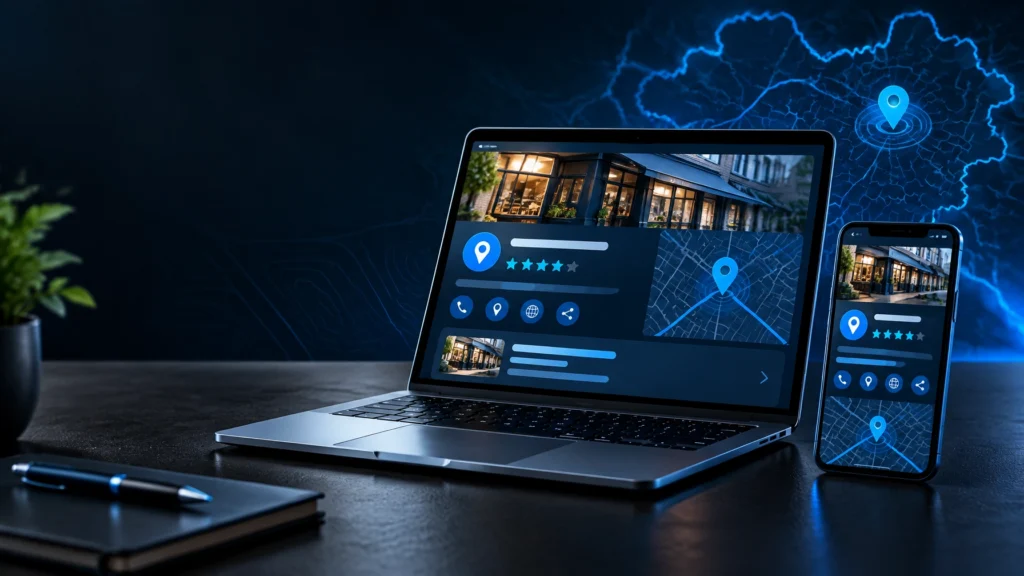

A dated website does more than look tired. It quietly tells potential customers that your business may be behind the curve too. For companies comparing providers in Greater Manchester, web design Bury is not just about appearance – it is about credibility, visibility, and whether your site helps win work.
Bury has no shortage of capable businesses. The issue is that many still rely on websites that were built years ago, patched together from templates, or launched without a clear growth goal. A smart site should not sit there as a digital brochure. It should support enquiries, improve search performance, and make your business easier to trust from the first click.
What good web design in Bury actually needs to do
Strong design starts with purpose. If a website looks polished but confuses visitors, buries key information, or loads slowly on mobile, it is underperforming. Good web design in Bury needs to work for the way local and regional customers actually browse, compare and buy.
That means clear messaging, straightforward navigation, considered page structure, and design choices that support action. People should understand what you do within seconds. They should know where to click next. They should not need to hunt for contact details, service information, pricing cues, or proof that you are credible.
This is where custom design matters. A generic template can be quick to launch, but it often forces your business into someone else’s layout, hierarchy, and logic. That can be fine for a temporary microsite. It is rarely the right long-term solution for a brand that wants stronger positioning.
Why template websites often fall short
Templates promise speed and affordability. Sometimes that trade-off makes sense, especially for early-stage businesses with minimal requirements. But there is usually a ceiling.
Template builds often come with bloated code, limited flexibility, and design conventions that look familiar for the wrong reasons. If five other businesses in your sector are using near-identical structures, your site will struggle to create distinction. Worse, many off-the-shelf builds are not planned around your sales process, your customer journey, or your SEO priorities.
A custom website gives you more control over how users move through the site and how your brand is presented. It also allows the design and development process to be shaped around what matters most – lead generation, bookings, authority, recruitment, e-commerce, or all of the above.
That does not mean every business needs an elaborate website. It means the site should fit the brief. A local consultant may need a lean, fast brochure site with strong calls to action. A multi-service company may need a more considered information architecture, service landing pages, and room for long-term content growth. The right solution depends on where the business is now and what it needs the website to do next.
Web design Bury businesses should expect from a serious agency
If you are investing in web design Bury agencies offer, the baseline should be higher than a visually tidy homepage. A proper process should cover strategy, content structure, user experience, technical performance, and launch readiness.
Design should begin with positioning. Who is the audience? What are they comparing you against? What objections do they have before making contact? Those questions shape the structure of the site as much as the visual style.
From there, UX and UI need to work together. UX determines how the site flows, how easily information is found, and how clearly pages support decision-making. UI brings the visual precision – spacing, typography, colour systems, hierarchy, imagery, and consistency. One without the other creates friction.
Development then needs to support performance, not compromise it. Fast load speeds, responsive behaviour across devices, clean builds, and stable functionality all matter. A beautiful site that breaks on mobile or loads sluggishly will waste traffic.
Local presence matters – but only up to a point
For some businesses, choosing a Bury-based web design partner is about convenience. Local knowledge can help, particularly if your audience is concentrated around Bury, Manchester, or nearby areas. A partner who understands the local market may have a better sense of competition, search intent, and how regional buyers assess credibility.
Still, location on its own is not enough. A nearby agency that only produces average work is not more valuable than a strong team based elsewhere. The real question is whether the agency understands your market, asks the right strategic questions, and can execute to a high standard.
For businesses serving both local and wider markets, the best web approach usually balances regional relevance with broader positioning. You may want location signals for search, but your brand still needs to feel credible at a larger scale.
SEO should be built in, not bolted on
One of the most common problems with redesigns is that SEO is treated as an afterthought. A business spends money on a new site, launches it, then realises rankings have dropped or that key service pages were never structured to perform.
A strong website should be planned with search visibility in mind from the start. That includes page hierarchy, headings, internal content relationships, metadata planning, mobile usability, speed, and copy that aligns with what customers are actually searching for.
For Bury businesses, this may include localised service terms, geo-targeted landing pages where relevant, and content that reflects the language real customers use. But there is a balance to strike. Overloading pages with location terms makes copy feel forced and weakens trust. Search-focused copy still needs to sound like a credible brand speaking to humans.
Design choices that improve conversions
There is a difference between a site that attracts visits and one that turns interest into action. Conversion-focused design is not about gimmicks. It is about reducing hesitation.
That usually starts with clarity. Visitors should not have to decode what your business offers. Service pages need substance. Calls to action should appear where intent naturally builds. Testimonials, case studies, certifications, or project examples should support trust at the right moments, not be hidden away.
Good conversion design also respects context. A person looking for a quick quote behaves differently from someone researching a higher-value service. One may want a short route to contact. The other may need more detail, more reassurance, and stronger evidence before enquiring. Effective websites accommodate both without becoming cluttered.
Content is part of the design
Many website projects lose momentum because content is left until late in the process. That creates rushed copy, weak page structures, and generic messaging. In reality, content and design should shape each other.
The strongest sites are built around clear messaging from the outset. Headlines define value quickly. Supporting copy gives enough depth without slowing the user down. Every page has a role. Every section earns its place.
This is especially important for service-led businesses. If your offer is nuanced, your content needs to make it easy to understand without flattening the value. If your market is competitive, your wording needs to show the difference without relying on vague claims about quality and service.
A well-written site also gives design more room to work. Better copy creates better hierarchy, more purposeful layouts, and stronger user flow.
When to redesign and when to refine
Not every website problem requires a full rebuild. Sometimes the core platform is sound and the issues sit in messaging, visual inconsistency, weak calls to action, or outdated page content. In those cases, a targeted refinement can be more efficient than starting from scratch.
But if the site is technically limited, difficult to update, poorly structured, or misaligned with the current brand, patching it may only delay the real work. A redesign becomes the better commercial decision when the current website is holding back growth, not just looking old.
That is often the point where businesses choose a more integrated partner. Studios such as DBL Designs tend to be valuable here because branding, UX, development, and performance thinking can be handled together rather than split across multiple suppliers.
Choosing a web design partner in Bury
The safest choice is not always the cheapest quote or the flashiest portfolio. Look at how an agency thinks. Do they ask about commercial goals, audience behaviour, and post-launch growth? Or do they jump straight to colours and mock-ups?
A good partner will be clear about process, realistic about timelines, and honest about trade-offs. They will know when a lightweight site is enough and when a more strategic build is needed. They will also care about what happens after launch, because websites perform over time, not just on handover day.
The strongest web design work does not simply make a business look better. It makes the brand easier to understand, easier to find, and easier to choose. If your current site is falling short on any of those points, that is usually the signal to stop treating it as a placeholder and start treating it as a growth asset.
A better website will not fix every business problem. But it can remove friction, sharpen perception, and create momentum – which is often exactly what growing brands need next.